- Home
- Shop
Shop
Showing 607–612 of 731 results

REAR BRAKE MASTER CYLINDER – 73-E79 FX/FL
$101.00REAR BRAKE MASTER CYLINDER – 73-E79 FX/FL
Rear Brake Master Cylinder 73-E79 FX/FL
- Complete rear master cylinder assembly
- Polished and chrome-plated
- Fully assembled for easy installation
- 3/4″ bore
- repl. OEM #41761-78
1979 Harley-Davidson 1200 Fat Bob FXEF
1979 Harley-Davidson Low Rider FXS
1979 Harley-Davidson Fat Bob FXEF
1979 Harley-Davidson Super Glide 80 FXE
1978-1979 Harley-Davidson Electra Glide FLH
1977-1979 Harley-Davidson 1200 Low Rider FXS
1974-1979 Harley-Davidson 1200 Super Glide FXE
1973-1979 Harley-Davidson Electra Glide FL
1973-1979 Harley-Davidson 1200 Electra Glide FLH
1973-1978 Harley-Davidson 1200 Super Glide FX
*Early 1979
- Availability:
82 in stock
- Categories: Uncategorized, BIKE PARTS

Rear End Spring Hangers Forged 2 1/4″
$94.99- SKU: Rear/Rear
- Availability:
34 in stock
- Categories: Body Parts, Engine Parts
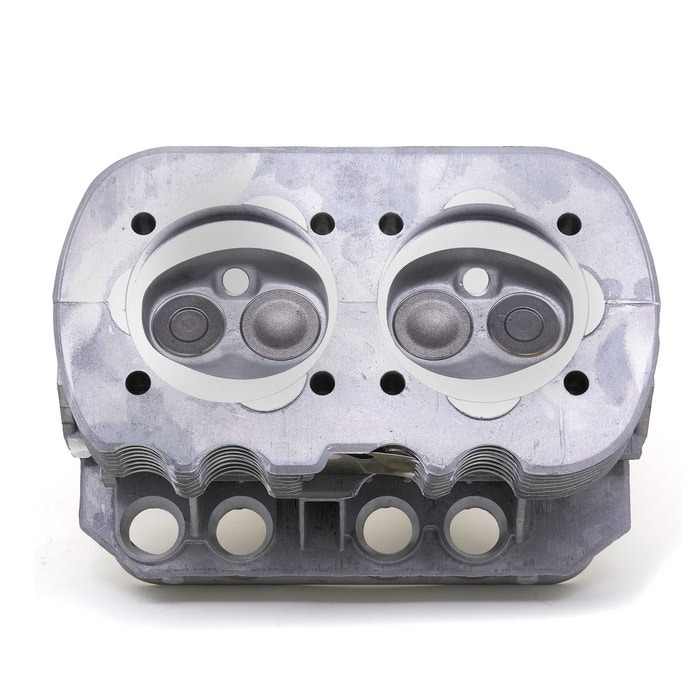
Rebuild Kit 1641cc Top End: Beetle (1971-1979)
$984.78Rebuild Kit 1641cc Top End: Beetle (1971-1979), T2 Bay (1971-1979), Karmann Ghia (1971-1974)
PRODUCT INFORMATION
| Also known as | 043198002 |
|---|---|
| Fitting Info | This kit can be fitted to earlier 1300-1600cc singleport engines. The inlet manifold and carburettor will need to be replaced with a Twinport version. |
| Marque | Volkswagen |
| Vehicle | Beetle, Type 2 Bay, Karmann Ghia, Beetle Cabriolet, Type 3 |
| Brand | Heritage Kits |
| Quality | Good Quality |
| Unit of sale | Kit |
| Standard or Upgrade | Standard |
| Weight | 1.00 |
FITS VEHICLES
| Beetle | 1971-1979 |
|---|---|
| T2 Bay | 1971-1979 |
| Karmann Ghia | 1971-1974 |
| Beetle Cabrio | 1971-1979 |
| Type 3 | 1971-1973 |
- Availability:
34 in stock
- Categories: Beetle Parts, Uncategorized

RHD Front Panhard Bar Batwing Bracket Un-Polished
$49.99- SKU: RHDF/RHDF
- Availability:
35 in stock
- Categories: Body Parts, Exteriors
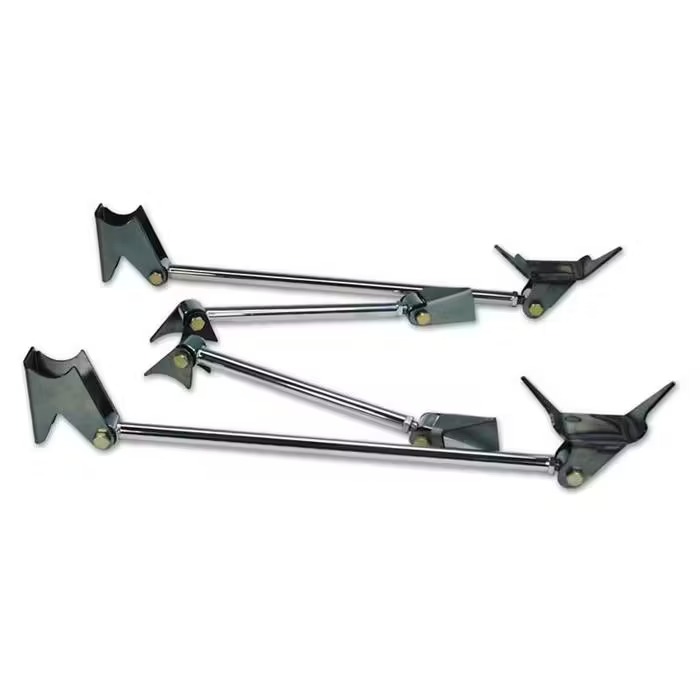
RideTech 18987999 Triangulated Weld-In 4 Link Kit
$678.98RideTech 18987999 Triangulated Weld-In 4 Link Kit, Powdercoated
The triangulated version 4Link is a tubular version of the tried and true rear suspension that GM has used since 1964. Welding and basic fabrication skills are needed. As a result, the triangulated 4Link is highly adaptable to a variety of custom installations. RideTech 18987999 Triangulated Weld-In 4 Link Kit
The triangulated 4 link can use a CoolRide style airspring/bracket/shock arrangement, with a Coil-Over, or a rear Shockwave® as an upgrade option. For the professional shop or advanced installer, the triangulated 4Link is the top choice. Now Includes R-Joints!
- No panhard bar needed
- Allows maximum suspension travel and tighter wheel to fender clearances
- Highly adaptable to most vehicles
- Simple, straightforward installation
The triangulated 4Link is designed for the professional builder who wants a straightforward, no-compromise rear air ride suspension.
4-Link Tech
What’s the difference between a triangulated 4 link and a parallel 4 link?
Both styles of 4 link accomplish the same thing… very simply, they hold the rear axle in the vehicle. The function of a 4 link is to keep the rear axle in its proper place under the vehicle. The bottom 2 links keep the axle in place front to back. The upper 2 links keep the axle from rotating, keeping the pinion angle as constant as possible.
On a triangulated 4 link the uppers bars are placed at an angle to the lowers. When connected securely to the axle and the frame they form a “triangle”. This is what keeps the rear axle centered under the vehicle.
On a parallel style, a “panhard bar” must be used. It runs horizontally across the vehicle connecting the axle to the frame, allowing only up and down movement. Although there are several theories as to which is “better”, in the real world it comes down to available space and preference.
A parallel 4 link fits most trucks better because the fuel tank is usually right in front of the axle, inboard of the frame. A parallel is sometimes easier to install because the link bar frame mount is one piece instead of two… less time in placing and welding the upper bar mounts.
But a parallel 4 link requires a panhard bar which adds slightly to the expense and can use up valuable space needed for the exhaust system. A panhard bar will also induce a small amount of side to side movement during suspension travel… not enough to feel but it may concern the customer who has an extremely tight tire to fender clearance.
With a parallel 4 link you are locked into a sideframe link position… with a triangulated 4 link the lower links can be placed beside the frame or under the frame for clearance purposes.
Either system is very straight forward to install. You will spend more time with the tape measure than the saw or welder. All else being equal, for the absolute rookie, the parallel may be a bit easier to visualize and understand during installation.
Triangulated 4 link (vs. parallel 4 link)
PROS
- NO side to side movement at all… you can run tighter tire to fender clearance.
- Less hardware to buy and install (no panhard bar)
- Allows flexibility in bar placement to avoid obstacles
CONS
- Angled upper bars can interfere with exhaust
- Angled upper bars can interfere with fuel tank on late model trucks
- 4 more attachment points to plot and install (parallel has bar mounts built together)
Why should I put a 4 link under my car? What will a 4 link do better than a leafspring?
In a leafspring suspension, the leafs perform 2 functions. First, they hold the rear axle in the car. They prevent both forward and aft movement and minimize pinion angle change during suspension travel. Secondly, while they are doing this, they also support the load of the vehicle. For an OEM vehicle that has had thousands of hours of development time behind it, and that will operate within a predictable range of suspension travel, leafsprings do a very adequate job. The problem occurs when the operating envelope is changed… lower ride height, more horsepower, different weight distribution, maybe a trailer… its called hotrodding! The leafsprings cannot be expected to perform as intended if the operating parameters are changed.
Just a few FAQ’s…
- I have a straight axle under my ‘32 and am happy with the ride height and quality. Can I use an air suspension on the rear only?
ABSOLUTELY! We have several customers who have installed a 4 link and airsprings or ShockWaves® under the rear of their vehicles to improve ride quality. The rear of the vehicle is where you will actually see the most ride quality improvement. This is because you sit closer to the rearend and any load changes (fuel, passengers, luggage, trailer) will be supported by the rear suspension. For those customers who are looking for ride quality… start with the rearend.
In setting up my rear 4 link air suspension, should I place the airsprings in front or behind the axle? Inboard or outboard of the frame-rail?
It really comes down to where there is the most room. A forward position will offer slightly more travel and can sometimes offer better ride quality. A rear position can offer slightly more load capacity. Any spring, coil, leaf, or air, will perform better if placed farther apart under the chassis. Keep in mind these performance differences are quite small and that the real criteria should be available space in your particular vehicle.
At what angle should I place the 4 link bars? The panhard bar? How critical are the angles?
We typically try to place the lower bars level at ride height. this will minimize “roll steer” (slight wheelbase change caused by the arc of the bars going through their travel). The upper bars should also be level, or slightly down at the front, if need be. This configuration will provide stable handling and braking characteristics. It is important to get the bars exactly the same from side to side to avoid unpredictable handling problems. It is also extremely important to make sure the panhard bar is level at your highway ride height. This will minimize side travel of the rear axle induced by the arc of the panhard bar going through its travel. Obviously there are precise formulas for placement of the 4 link bars to maximize certain performance criteria, but these performance differences are quite small on a road car. Put the bars in level, or close to it, at ride height, and you’ll be fine
- Availability:
33 in stock
- Category: Uncategorized
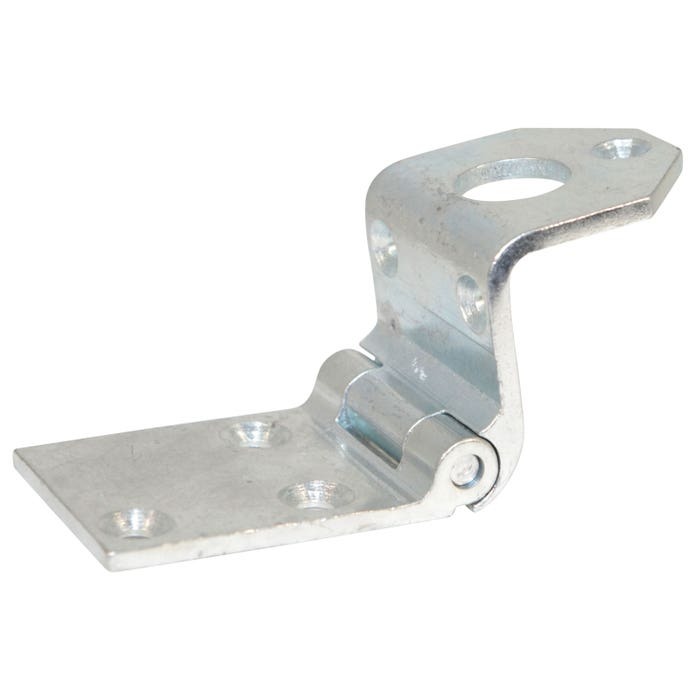
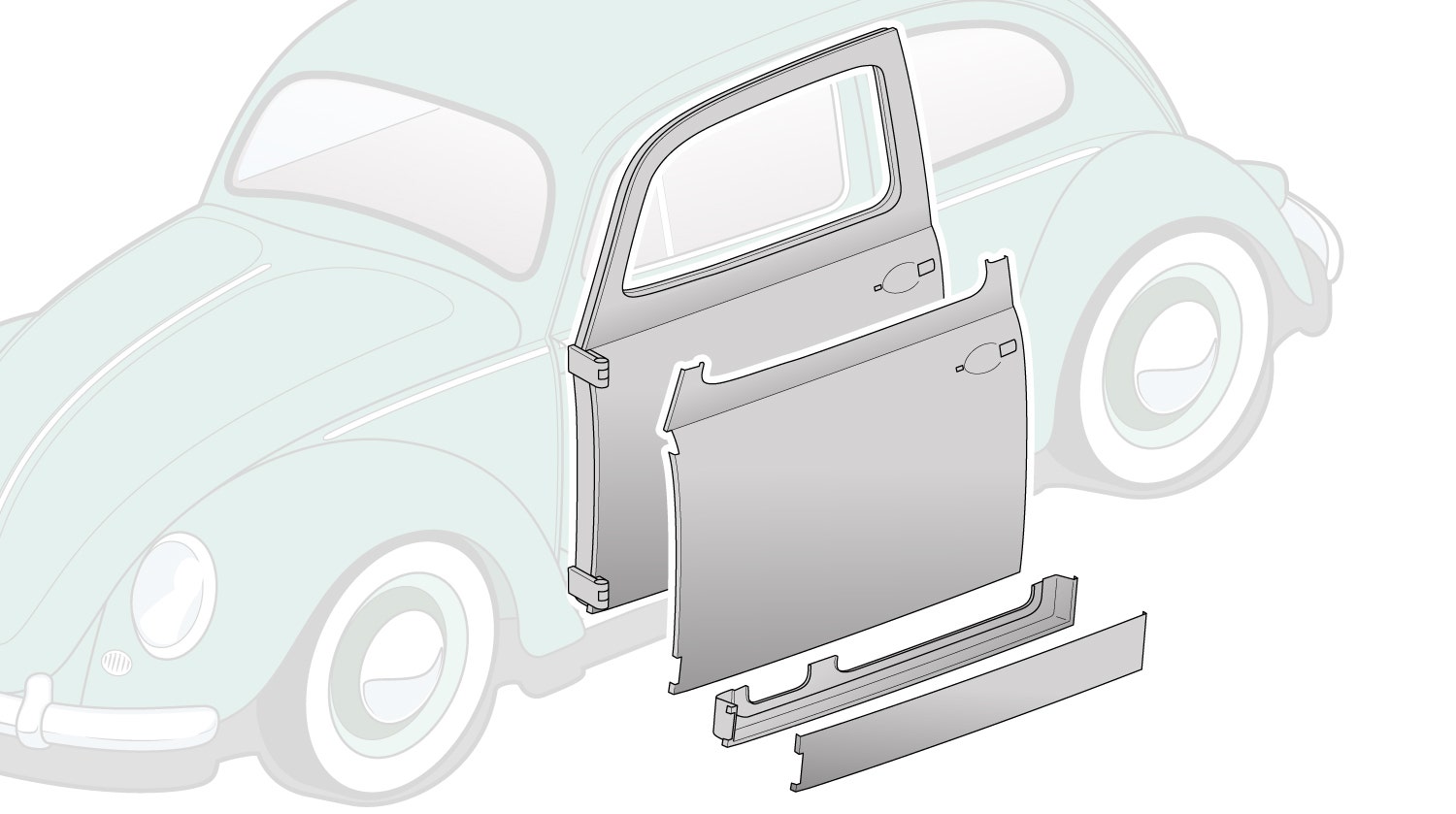
Right Lower Door Hinge: Beetle (1956-1979), Beetle Cabrio (1956-1979)
$88.89Right Lower Door Hinge: Beetle (1956-1979), Beetle Cabrio (1956-1979)
PRODUCT INFORMATION
| Also known as | 111831412D |
|---|---|
| Marque | Volkswagen |
| Vehicle | Beetle, Beetle Cabriolet |
| Brand | USA |
| Quality | Good Quality |
| Left or Right | Right |
| Unit of sale | Each |
| Supplier code | 111831412D |
| Weight | 1.00 |
FITS VEHICLES
| Beetle | 1956-1979 |
|---|---|
| Beetle Cabrio | 1956-1979 |
- Availability:
31 in stock
- Categories: Beetle Parts, Uncategorized